

Rocky View County pauses new data centre proposals
KCJ Media Group staff
July 30, 2026 at 7:04:57 a.m.
Alberta News
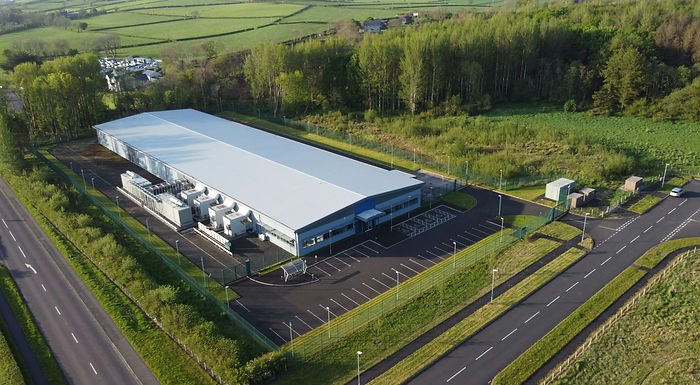
Photo: Rocky View County has temporarily paused new data centre proposals while it creates regulations for the expanding industry. The decision follows opposition to projects near Balzac while residents in Olds have also raised concerns about noise, emissions, water, farmland and public consultation. Unsplash
Rocky View County has temporarily stopped accepting new data centre proposals while municipal officials develop regulations for the rapidly expanding industry.
Council approved the pause during a meeting last week. It will remain in effect until the county establishes policies governing matters such as land use, water, electricity, noise, taxation and the effects of the developments on nearby residents and agricultural operations.
Coun. Alison Whiting, who introduced the motion, said the data centre industry has changed significantly during the past year and the pause will give the county time to answer outstanding questions.
Rocky View County surrounds much of Calgary and has attracted considerable interest from companies seeking land for large-scale artificial intelligence and computing facilities.
The municipality has already approved land-use changes for the Beacon AI Hub near Indus. The proposed development covers approximately 900 acres and includes plans for data centres and on-site electricity generation.
However, county council rejected a separate proposal near Balzac in September 2025 following opposition from neighbouring landowners.
Kineticor had proposed developing an approximately 1,100-acre technology complex on farmland north of Highway 566. Council voted 6-1 against the plan after residents raised concerns about the loss of agricultural land, noise, dust, runoff, water use and what they considered a rushed public review process.
The company said the development could have generated more than $14 million in annual municipal tax revenue while supporting additional economic activity.
The latest pause does not cancel projects that have already received approval. It prevents the county from considering additional proposals until its new regulatory framework is completed, which is expected within the coming months.
Opposition reported in Olds
Rocky View County is not the only Alberta municipality where residents have challenged major data centre plans.
In Olds, residents organized against a proposed $10-billion Synapse Data Centre development planned near homes, farmland and Olds College.
The project would include a large natural gas generating facility capable of producing about 1.4 gigawatts of electricity. The power would be used primarily by the data centre rather than supplied to Alberta’s electrical grid.
Residents raised concerns about air emissions, noise, traffic, wetlands, wildlife, water use and the proximity of the industrial development to residential properties. They also questioned how quickly the project moved through the municipal land-use process and whether the public had received enough technical information.
The Alberta Utilities Commission rejected the initial power plant application in March. The regulator identified incomplete or inconsistent application materials and deficiencies in public consultation, environmental information and noise assessments.
The decision did not permanently stop the project. Synapse was permitted to submit a new application after addressing the commission’s concerns and the company subsequently reapplied.
Olds council has continued to support data centre development as a potential source of investment and municipal revenue. The opposition in that community has largely come from residents rather than council as a whole.
Province promotes industry growth
The Alberta government has been actively encouraging data centre construction as part of its strategy to make the province a major North American centre for artificial intelligence infrastructure.
The province says Alberta offers abundant natural gas, a cold climate, competitive taxes and opportunities for facilities to build their own electricity generation.
Its strategy calls for streamlined regulatory approvals while maintaining reliable and affordable electricity and considering the capacity of Alberta’s water resources. It also promises collaboration with municipalities as projects move forward.
Supporters say data centres can generate construction work, assessment revenue and new investment. Critics question how many permanent jobs the largely automated facilities will provide and whether their economic benefits will outweigh demands on land, water, electricity and local infrastructure.
The experiences in Rocky View County and Olds show that municipal approval cannot be taken for granted as the size and number of proposed developments increase.
While no broad province-wide municipal opposition movement has emerged, organized resistance has been documented around specific projects in Balzac and Olds. Rocky View County’s temporary pause represents one of the clearest examples to date of an Alberta municipality delaying further development while it establishes more detailed rules.


Latest News

Alberta pharmacy changes bring longer fills and new benefit order

Saving Money By Fueling Ourselves at Home

Rising bond yields add pressure to TSX and borrowing costs

Alberta proposes steep fines and jail terms for illegal dumping
