

Crime and fraud survey finds widespread impact
KCJ Media Group staff
January 15, 2026 at 6:51:41 a.m.
Canadian News
Photo: Source Angus Reid Institute Survey
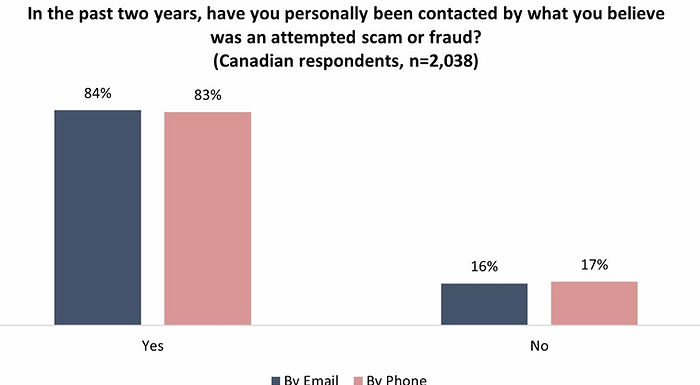
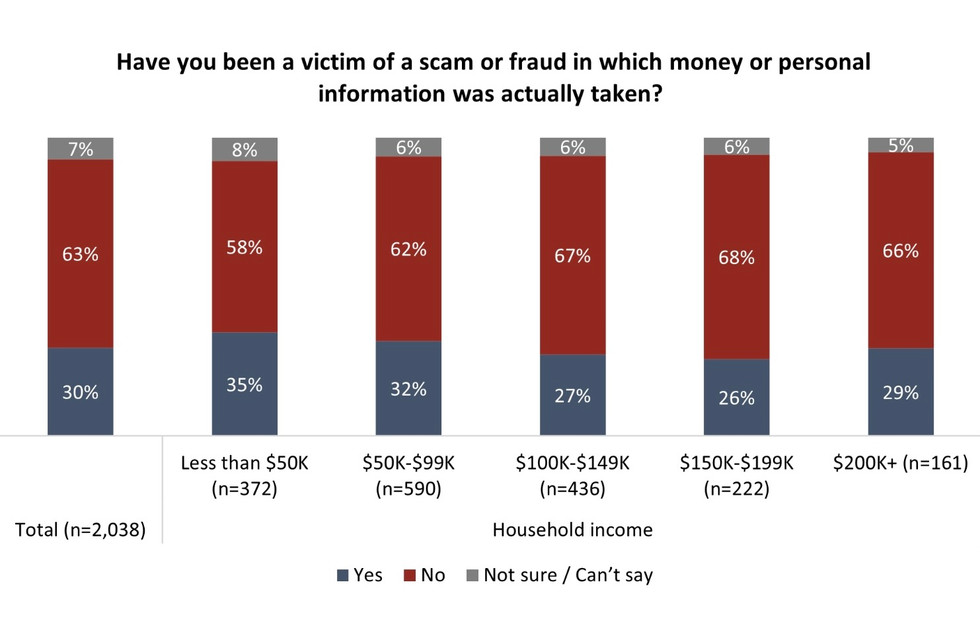
A recent Angus Reid poll shows that a significant share of Canadian adults report experiences with crime and fraud extending beyond what is typically documented through police reports. According to the online survey conducted by the Angus Reid Institute from November 5 to 7, 2025, more than four in five Canadians say they have been the target of an internet or telephone scam over the past two years, and about 30 per cent indicate that such interactions resulted in the loss of money or personal information. When incidents of fraud and identity theft are combined with police-reported crimes, roughly 36 per cent of respondents report having been victims of some form of criminal activity during that period. The poll also highlights that Canadians lost over $638 million in fraud cases in 2024, although only a small fraction of those incidents are thought to be reported to authorities.
The survey results reflect broader perceptions of public safety and crime trends in Canada. A majority of respondents — approximately 62 per cent — believe that crime in their local communities has increased compared with five years earlier, far outpacing those who see no change or a decrease. The data indicates that this perception of rising crime is highest in relation to non-violent offences such as fraud and shoplifting, though traditional crime rates reported by Statistics Canada show relatively consistent levels of police-reported incidents over recent years. The poll finds that half of Canadians perceive that shoplifting has become more prevalent and many retail workers report frequent encounters with shoplifting, verbal abuse and threats in the workplace. Older adults are nearly twice as likely as younger respondents to report having been victimized by fraud or identity theft.
The Angus Reid poll also compares Canadian perceptions with those in the United States, finding that Canadians are more likely than Americans to say that crime is growing in their communities. Despite this, the rate of police-reported violent crime remains higher in the United States. The Canadian data further suggests a declining sense of comfort with personal safety in familiar neighbourhood settings after dark. The methodology for the poll included weighting responses from a randomized sample of more than 2,000 adults to reflect national demographics and carries a margin of error of approximately two percentage points.



Latest News

Canadians cannot afford a politically motivated trade war

RCMP release clearer images of truck linked to Brooks arson

Facelift for the Three Hills water reservoir

Lacombe town hall tests public response to Alberta data centres
