

China discloses renewed defence talks with Canada
KCJ Media Group staff
September 9, 2026 at 7:06:23 a.m.

Canadian Politcs
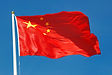
Photo: Canada and China have reopened a formal military dialogue after eight years, but the meeting was initially disclosed by China and reported by foreign publications. The development comes despite continuing Canadian concerns about Chinese election interference and national security. Unsplash.
Canada and China have resumed formal military talks after an eight-year break, but the first public confirmation of the meeting came from China’s Ministry of National Defence rather than the Canadian government.
The Chinese ministry announced that the fifth China-Canada Defence Coordination Dialogue was held in Canada on Sept. 4. It said representatives discussed international and regional issues and indicated an interest in further exchanges between the two militaries.
The South China Morning Post, a Hong Kong-based newspaper, reported the meeting Sept. 5. The Chosun Daily, a South Korean publication, followed with an English-language report Sept. 6. These were among several Chinese and regional publications that carried or repeated information originating with China’s defence ministry.
The South China Morning Post reported that this was the first meeting through the Defence Coordination Dialogue since April 2018 and the fifth since the channel was established in 2013.
As of Sept. 9, Rural Alberta Report could not find a news release from Prime Minister Mark Carney, the Department of National Defence or the Canadian Armed Forces announcing the Sept. 4 meeting or explaining Canada’s objectives. The absence of a public Canadian announcement leaves unanswered questions about who represented Canada, what specific issues were discussed and what future military co-operation may involve.
The dialogue comes as the federal government works to rebuild economic and diplomatic relations with China while reducing Canada’s dependence on the United States.
Carney travelled to Beijing in January 2026, becoming the first Canadian prime minister to visit China since Justin Trudeau in 2017. He met Chinese President Xi Jinping, Premier Li Qiang and other senior officials.
The Prime Minister’s Office described the trip as the beginning of a new strategic partnership centred on energy, agriculture and trade. Canada and China also signed agreements covering crime prevention, cultural exchanges, wood products and food safety.
National Defence documents released earlier in 2026 show that the department continues to view China as a security concern. The department also expressed concern about China’s ambitions in the Arctic, its actions around Taiwan and the continued militarization of the South China Sea.
Canada’s renewed engagement also comes after extensive investigations into Chinese interference in Canadian politics by Canadian Security Intelligence Service (CSIS).
Evidence presented to Canada’s Foreign Interference Commission showed that CSIS concluded China interfered in the 2019 and 2021 federal elections. The commission found that China was the most active foreign-interference threat during those elections and used covert or deceptive methods to support people considered favourable to Beijing and target others whose positions opposed Chinese government interests. It said activities could have influenced results in some ridings and damaged public confidence in Canadian democracy.
A separate review by the National Security and Intelligence Review Agency found broad agreement within Canada’s intelligence community that political foreign interference is a significant threat and that China is a major perpetrator at all levels of government. The review also identified serious problems in how intelligence was communicated to senior officials.
China has repeatedly denied interfering in Canadian elections.
Carney’s previous business relationship with China has also received attention. Before entering federal politics, he was chair of Brookfield Asset Management and led its transition-investing business.
On March 27, 2024, Carney attended a meeting with Xi in Beijing as part of a group of foreign business leaders. The meeting occurred about 10 months before Carney entered the Liberal leadership race.
A financial report published in November 2024 said Brookfield was negotiating a 15-year, 1.96-billion-yuan refinancing package for an office complex in Shanghai. The amount was then equivalent to approximately US$276 million. The proposed lenders reportedly included the state-owned Bank of China.
Carney resigned from Brookfield on Jan. 16, 2025, the same day he formally entered the Liberal leadership contest. He became Liberal leader in March 2025 and was subsequently sworn in as prime minister.
The resumption of military dialogue represents another significant step in the change in Canada-China relations. However, the lack of a detailed Canadian announcement means most of the publicly available information about the Sept. 4 meeting continues to come from China’s government and foreign news organizations.


Latest News

Alberta crude oil anchors energy trade between provinces
China discloses renewed defence talks with Canada

County of Stettler launches new Investment Attraction website

Welcome to Keep It Simple
