

Lacombe town hall tests public response to Alberta data centres
KCJ Media Group staff
August 21, 2026 at 8:16:15 p.m.
Alberta News
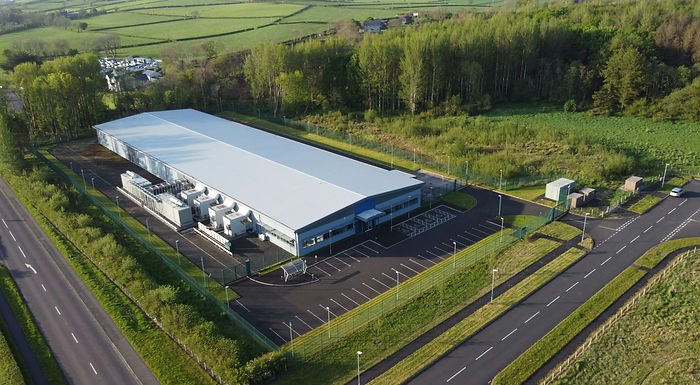
Photo: Hundreds of central Alberta residents attended a Lacombe town hall where concerns about data-centre electricity use, water, land, privacy and government oversight dominated the discussion. Photo credit: Unsplash
Alberta’s first public town hall on artificial intelligence data centres drew hundreds of people to Lacombe, where residents questioned the province’s approach to electricity, water, land use, privacy and local decision-making.
Technology and Innovation Minister Nate Glubish addressed an estimated 300 to 400 people at the Lacombe Memorial Centre on Wednesday evening.
The meeting was organized as part of a provincial town hall series intended to provide information and hear public concerns about large data-centre developments.
Glubish was invited by Lacombe-Ponoka MLA Jennifer Johnson. The meeting became tense at times, with interruptions, jeering and expressions of distrust directed toward the provincial government.
Residents from Lacombe, Olds, Red Deer and other central Alberta communities raised concerns about water consumption, electricity demand, pollution, development near homes and farmland and the possibility that abandoned projects could leave costs for taxpayers.
Questions were also raised about artificial intelligence, personal privacy, government surveillance and the number of permanent jobs the facilities could provide.
Glubish presented data centres as large industrial buildings filled with computers that process and store digital information. Artificial intelligence requires more powerful computing equipment and considerably more electricity than conventional data storage.
The minister said the industry could create new demand for Alberta natural gas, encourage private investment in electricity generation and support employment in rural areas.
He also said data-centre projects must be developed in suitable locations and pass the required municipal, environmental and utility reviews.
The Alberta government’s data-centre strategy is built around three areas: power capacity, sustainable cooling and economic growth. The province has said projects should not weaken the reliability or affordability of the electricity system.
Water use has become another major concern because some data centres require substantial cooling systems.
Provincial approvals depend on the design and location of each project, including whether it requires a Water Act authorization or an environmental review.
The Lacombe meeting followed the Alberta Utilities Commission’s rejection of a proposed natural gas power plant connected to the Synapse data-centre proposal near Olds.
The commission determined the power plant’s proposed location was too close to the surrounding community and was not in the public interest. The decision did not amount to a blanket rejection of data centres in the region, but it prevented the proposed generating facility from proceeding as submitted.
An Olds resident told the Lacombe meeting that the regulatory process had consumed months of residents’ time and left the community without enough information or protection.
Glubish acknowledged that residents should have received information sooner.
He also told the meeting that a smaller data-centre development may be under consideration near Clive. No regulatory applications had been submitted at the time of the meeting.
That distinction is important because a proposal does not have permission to proceed until it receives all required municipal and provincial approvals.
The Lacombe gathering was followed by a second town hall Thursday in Sturgeon County, where Meta has announced plans for a $13-billion data-centre project supported by a proposed natural gas-fired power plant.
Premier Danielle Smith and Glubish are scheduled to participate in a virtual town hall Aug. 27. Another in-person meeting is scheduled for Sept. 11 in Grande Prairie.
The province has also opened an online information hub explaining the regulatory process and how residents can participate in municipal hearings, regulatory proceedings and other consultations.


Latest News

Lacombe town hall tests public response to Alberta data centres

McKenzie Crossing Bridge replacement planned for Highway 590

What’s happening this weekend in East-Central Alberta

Fire restriction takes effect in County of Stettler
