

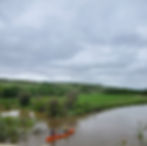
Paddling Paintearth Creek
Cheryl Bowman, The Rural Alberta Report
June 5, 2026 at 1:48:04 p.m.

Local News
Photo: Submitted by Dwayne Felzien
East-Central Alberta has received some of the heaviest rainfall seen in recent years over the past week, bringing much-needed moisture to drought-prone areas but also creating concerns for farmers and ranchers as saturated fields delay fieldwork and increase the risk of crop and livestock issues.
A prolonged storm system moved across much of central and southern Alberta between May 30 and June 2, producing widespread rainfall totals that exceeded normal monthly amounts in some locations. Weather reports indicated several areas of central Alberta received between 50 and 100 millimetres of rain during the event, with some localized areas recording even higher amounts. The Weather Network reported that some locations across Alberta approached or exceeded 100 millimetres of precipitation during the multi-day system.
The rainfall arrived after portions of Alberta entered the growing season with lingering moisture deficits.
Agriculture and Agri-Food Canada's latest drought assessment showed much of the northern and central Prairies had already received above-normal precipitation this spring, and the recent storm has further improved soil moisture reserves across many agricultural regions.
While the rain has replenished dugouts, pasture land and crop moisture reserves, excessive moisture can create new challenges for producers.
Wet field conditions can delay seeding operations and prevent spraying of emerging crops. Saturated soils may also lead to ponding in low-lying areas, reducing plant growth and increasing the risk of seedling diseases. Producers with hay and forage crops may face difficulties accessing fields if wet conditions persist.
For ranchers, extended periods of cool, wet weather can increase stress on young livestock and create muddy conditions around feeding and watering areas. Excess moisture can also affect pasture management if cattle cause soil compaction in saturated fields.
Weather forecasts suggest the region may not receive much opportunity to dry out during the coming week. Environment Canada is forecasting periodic chances of showers and thunderstorms across central Alberta through much of the next seven days, with daytime highs generally ranging from the mid-teens to low 20s Celsius. Additional showers are possible on several days between June 5 and June 10.
Longer-range outlooks for the Prairies indicate a continued pattern of scattered showers and relatively cool conditions through mid-June, which could maintain favourable moisture levels but slow drying in some agricultural areas.
For many producers, the recent rains represent a mixed blessing. After several years in which moisture shortages were a primary concern, water supplies have improved considerably. However, if additional rainfall materializes over the next week, attention may shift from drought concerns to managing excess moisture and delayed field operations as the growing season advances.


Latest News

Four charged after break-ins at Red Deer County gas plant

More than passionate about copper

Competition Bureau orders sale of Sask. grain elevator

Calgary loses energy giant presence
