

‘Shop Canadian’ ideas in central Alberta
Stu Salkeld, LJI journalist /The Rural Alberta Report
January 12, 2026 at 6:47:56 a.m.
Alberta News
As Albertans head into 2026 uncertainty continues to dominate politics and economies. Much has been made up to this point to “Buy Canadian,” as inflationary pressures never seem to subside. In the current age of online shopping, is it that simple to “Buy Canadian?”
One can go to online shopping centre Amazon.ca and simply type into the search engine, “Shop Canadian,” with hundreds if not thousands of results popping up. However, while some of the results may be from Canadian retailers or sources, some may seem patriotic but don’t bear up upon closer inspection.
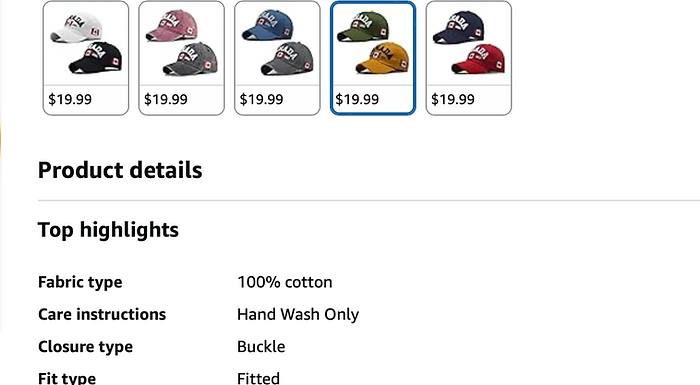
After the Amazon search noted above, one item, a unisex Canada maple leaf baseball cap, was in the top results. Amazon provides a country of origin for most items available on their website though, and apparently this hat comes from China.
Another popular online marketplace, eBay.ca, always offers an option on the lefthand side of the screen where shoppers can narrow-down an item’s country of origin; shoppers can simply select “Canada” and only Canadian sellers will be featured, with foreign countries listed seperately.
An easy way to support local, Alberta and Canadian businesses is to subscribe to a community newspaper like the Rural Alberta Report; community papers like RAR promote local business and are a simple way to find reputable local or provincial businesses.
Chambers of Commerce
Alberta Chambers of Commerce President and CEO Shauna Feth stated in a Jan. 9 interview with the Rural Alberta Report the “Shop Canadian” subject is important. “It really is, and not just in a symbolic or patriotic sense,” stated Feth in an email. “When people hear ‘Shop Canadian,’ they sometimes think it is a slogan. In reality, it is about what happens to our jobs, our main streets, and our communities when we decide where to spend our money.
“Every time someone chooses a Canadian product or supports a local business, they are doing more than making a purchase. They are helping support jobs, families, and main streets across Alberta. Even in cases where a brand is national or international, many locations are locally owned and employ people from the community, which means those spending decisions still matter close to home.
The subject is serious noted Feth, and hold consequences. “This is where the impact becomes clearer,” she stated. “When spending consistently goes outside the community, often without people realizing it, a lot of that money leaves and does not come back. Over time, that can mean fewer local jobs, fewer services, and fewer businesses able to support community events or local sports teams. Research shows that when you spend a dollar at a small Canadian business, about 66 cents stays in the local economy. When spending shifts away from businesses with a strong local footprint, that benefit shrinks, and communities feel it.”
She observed Albertan and Canadian communities benefit from a “Shop Canadian” attitude. “When it is spent locally, money keeps moving” said Feth. “It supports employees who live in the community, who then spend their wages locally, while businesses reinvest in equipment, training, and expansion. That ripple effect strengthens communities. It helps keep main streets active, supports local services, and creates stability during economic ups and downs. Over time, it builds resilience that benefits everyone. When Canadians choose Canadian products and services, they are strengthening a national economy that is built community by community.”
A “Shop Canadian” attitude isn’t necessarily costly added Feth. “It does not have to be difficult, and it does not have to mean paying more every time,’ she noted. “The key is being intentional, not perfect.
Sometimes Canadian made products do cost a little more, but many people are willing to spend a bit extra when they understand the local impact. In many cases, Canadian options are competitively priced and offer strong quality and service. A few simple habits can help. Look for Canadian made products when possible. Ask questions about where products come from. Support local service providers, not just retail stores. And when choosing where to shop, consider which businesses are rooted in the community and reinvest locally.
“Small decisions, made consistently, add up. When Albertans shop Canadian, they are not just buying a product. They are helping build strong communities and a resilient economy for the future, one purchase at a time.”
Look closely
Those who look closely may be rewarded. Going back to Amazon.ca again, someone who works in agriculture, construction, the oil and gas industry or anywhere that requires a CSA approved steel-toe boot could consider a product made by a Toronto company called KPR Safety. The company has a line of steel-toe work boots available on Amazon for competitive prices and all of its listings have “Canada” as its country of origin. In fact, KPR states its products are manufactured right in Toronto and in the customer reviews section 86 per cent of responses rate KPR products as four or five stars out of five.
The agriculture community can help too. There are many options open to them to support Canadian businesses and suppliers. One of the most obvious is to look at organizations like Central Alberta Co-Op, which is locally owned and operated. Although some of the products offered at co-op may originate in the U.S. or China, the organization itself is Alberta-owned.
The United Farmers of Alberta (UFA) is another great option; it also is member-owned entirely within Alberta and while it may sell some products that originate from foreign countries, the organization itself is Canadian.
Some noteworthy companies operating in Canada that are foreign-owned include shopping mall clothing chain La Senza which is owned by an American firm called Regant LP, Labatt Brewing Co. which is owned by Belgian corporation Anheuser-Busch InBev, Roots Canada which is majority-owned by American corporation Searchlight Capital and Molson Brewing, which is owned by American corporation Molson Coors. Costco Canada is a subsidiary of American firm Costco Wholesale Corporation while Home Depot Canada is a wholly-owned subsidiary of U.S. giant The Home Depot, Inc. RONA often paints itself as Canadian but is actually owned by New York-based Sycamore Partners.
Supporting Canadian-owned businesses helps those businesses prosper and they use that revenue to do things like pay property taxes, provide jobs and perhaps grow in the future. When Canadians support foreign-owned corporations, at least some of the money spent probably ends up leaving Canada and never returns.


Latest News

Canadians cannot afford a politically motivated trade war

RCMP release clearer images of truck linked to Brooks arson

Facelift for the Three Hills water reservoir

Lacombe town hall tests public response to Alberta data centres
